Edible Insects Provide a Solution to Food Insecurity
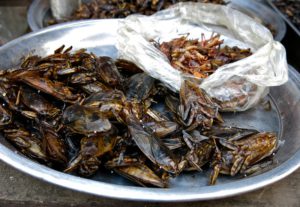 Edible insects may be the solution to alleviating food insecurity. With rising global rates of hunger and a growing population, the world needs affordable, sustainable and accessible food sources. Traditional livestock requires acres of land, not to mention massive quantities of crops for feed and a lot of water too. Overall, livestock does not present a sustainable food source for the future. Edible insects, however, are increasing in popularity as research reveals a myriad of benefits that make edible insects a possible solution to reducing food insecurity across the world.
Poverty and Food Shortages
According to a U.N. report, in 2020, “between 720 and 811 million people in the world” suffered from hunger. Additionally, 2.37 billion people worldwide did not have sufficient access to adequate food. Both of these statistics saw an increase in the millions in comparison to pre-pandemic numbers.
Soaring food prices are making it even more challenging for those with low incomes to afford food. According to “rapid phone surveys done by the World Bank,” 48 nations across the world report “a significant amount of people” experiencing food shortages and resorting to minimizing food consumption due to financial struggles. Food shortages greatly affect the overall health and nutrition of people.
Children are particularly susceptible to the impacts of inadequate nutritious food as malnutrition can lead to detrimental, lifelong consequences for children. Because nutritious food generally costs more, a nutritious meal is out of reach for many impoverished people, especially during COVID-19.
Current Food Industry
By 2050, the expected global population will increase to roughly nine billion people. To keep up with the food demands of a growing population, “global agriculture production” needs to increase by 60-70%. However, the agricultural sectors of the world experience frequent threats from droughts, natural disasters, soil degradation and more.
About 80% of global farmland is used for feeding and raising livestock. A large proportion of arable land used for crops go toward animal feed. Moreover, greater land use for livestock leads to more deforestation. The meat industry is one of the largest industries in the world. Per capita, meat consumption has more than doubled since 1961. Unfortunately, livestock production is an unsustainable practice resulting in water pollution, greenhouse gas emissions and deforestation.
Livestock production contributes to 14.5% of global greenhouse gas emissions, according to the FAO. More than 70 billion animals are slaughtered each year, requiring acres of land and tons of feed. In developing countries especially, many people simply cannot afford the high cost of a nutritious diet, bringing about an increasing need for affordable and sustainable food sources.
The Rise of the Edible Insect Market
Insects are raised in warehouses, utilizing less farmland and feed. Furthermore, insects are low-cost and are easily accessible. Cultures around the world have consumed edible insects for hundreds of years yet many people express distaste in welcoming insects into their diets. But slowly, as people realize the many benefits of edible insects, more people are open to insects as a food source. Insects could be a solution to the issues surrounding poverty, food insecurity and environmental impact. The edible insect market is expected to reach $4.63 billion by 2027, making it a viable business venture as well.
The Specific Benefits of Edible Insects
- Insects produce significantly fewer gases that pollute the air and water. One study found that crickets release “80% less methane than cows and 8-12 times less ammonia than pigs.”
- Insects require less land, water and feed than the world’s typical livestock.
- “Insects are 12-25 more efficient at converting energy into protein than animals.”
- If the world replaces half of all meat consumption with insects, farmland usage would be cut by roughly 33% or slightly more than 4,000 acres.
- Insects contain 60% protein, providing more protein than chicken and beef. Insects also contain more vitamins and minerals than beef, including iron, zinc and magnesium. In areas facing famine or food shortages, powdered crickets or mealworms provide nutrition and prevent disease.
- Insects can help increase food crop production by reducing the need for crops as livestock feed since insects can serve as livestock feed. Insects can also survive on leftover food and agriculture scraps.
- Insect excrement can be used as fertilizer.
Looking Forward
An important aspect of raising edible insects is finding a species that is suited for the region and is socially acceptable, especially in areas of poverty. The insect must be affordable enough for people of different economic backgrounds to purchase. Edible insects are packed with nutrients and present a potential solution to many environmental and social challenges. Overall, insects hold great value in addressing rising levels of global food insecurity.
– Madeleine Proffer
Photo: Flickr
